
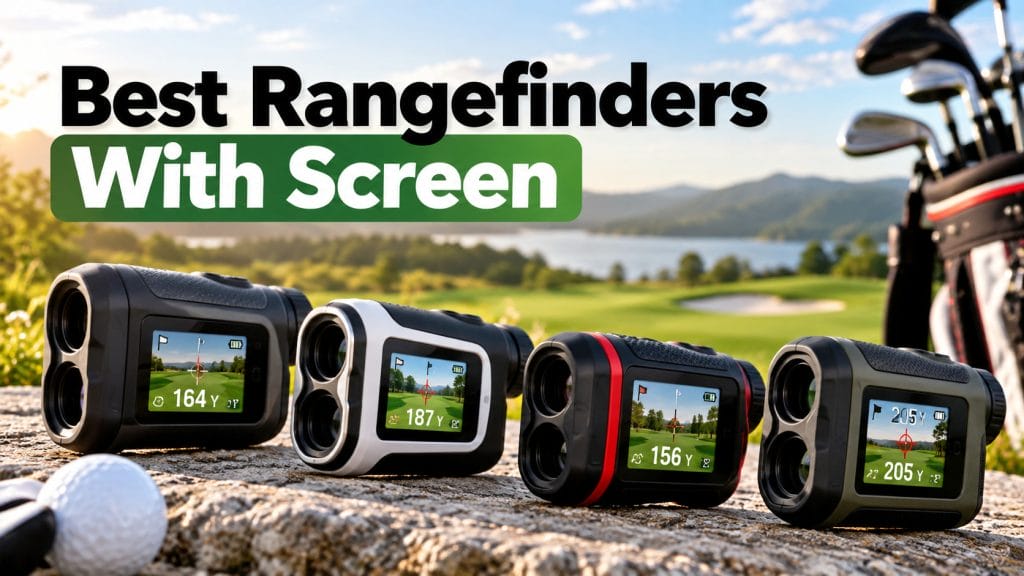
Squinting through a tiny eyepiece works fine until your playing partner asks, “What did you get?” and you have to hand the rangefinder over. Rangefinders with a screen fix that. They put yardages, course maps, and even the whole target view on a display you can read at a glance and share with your group. I played several rounds with each of the units below, comparing screen readability in bright sun, accuracy against known yardages, and how much the screen actually helped me decide on shots. These are the best rangefinders with screen that I trust in my bag this season.


Buying Guide for the Best Rangefinders With Screen
Laser, GPS, or Hybrid
Laser rangefinders with a screen give exact yardages to the flag. GPS handhelds show front, center, and back distances plus hazards without aiming. Hybrids like the Mileseey G1 combine both for the most complete picture.
Screen Type and Size
AMOLED and color touchscreens are the sharpest and most interactive. LCD screens are simpler but still easy to share. Bigger screens of 3 inches or more are easier on the eyes, especially for senior golfers.
Sunlight Readability
Check for high brightness or adjustable display colors. A screen that washes out at midday defeats the purpose.
Subscriptions and Course Updates
For GPS units, look for preloaded courses with no subscription fees and free updates.
Battery, Mounting, and Tournament Rules
Screens use more power, so look for all-day battery life. A magnet helps on the cart, and a slope switch keeps you tournament legal.
1. MILESEEY G1 Touchscreen & GPS Rangefinder with 43000+ Built-in Golf Courses

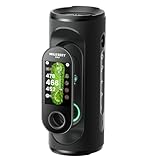
The G1 GenePro is the most advanced rangefinder with a screen I have tested. Its 2.13-inch AMOLED touchscreen stayed clear in direct afternoon sun, and I could tap, swipe, and zoom around the hole without a phone. It combines a laser with GPS and includes 43,000+ preloaded courses with no subscription, showing dynamic front, center, and back yardages.
My favorite feature was Ball to Pin mode. I tapped two points on the screen to get the carry over a pond on a par 5 layup. The laser locks flags from 600 yards in 0.1 seconds, accurate to plus or minus 0.5 yards, with 6x magnification and vibration. SmartSlope factors in elevation, temperature, and humidity, and a rotating switch turns it off for tournaments. It is rated IP65, has rain and fog modes, and its 24-hour battery covers two rounds.
Pros
- Large AMOLED touchscreen with laser and GPS combined
- No subscription on 43,000+ courses
- 10-year manufacturer warranty
Cons
- No built-in magnet (a magnetic case is sold separately)
- $499.99 price
2. ACPOTEL Golf Range Finder with Slope Switch, 750yd External Screen

The ACPOTEL PF260 has a large 2-inch external LCD screen. After ranging, I could turn it around and show my partners the number, which kept our group moving. It offers six modes: speed, distance, scan, point to point, flag lock, and vertical height. It pairs 6x magnification with adjustable focus and a 750 range.
A physical tilt switch turns slope compensation on and off for tournament play. It weighs only about 0.2 kg in the hand and comes with a premium carry bag. ACPOTEL backs it with a 30-day money-back guarantee and an 18-month replacement warranty.
Pros
- Shareable external screen
- Six versatile modes
- 18-month replacement warranty
Cons
- Shorter maximum range than others
- Only 10 left in stock at the time of writing
3. Callaway Golf Screen View Golf Laser Rangefinder

The Callaway Screen View changes how you range. Instead of looking through a scope, you view and range the target on a large color display. For golfers who wear glasses or struggle with eyepieces, this felt far more natural in my testing. The high-resolution OLED shows yardages and crosshairs in red, white, or black, and the 4x to 10x zoom helped me find flags against busy backgrounds.
Pin Acquisition Technology locks on up to 300 yards away with a pulse vibration, and slope mode is accurate to plus or minus 1 yard. Magnahold magnets held it firmly on my cart frame, and the rechargeable battery lasts 6 to 8 hours per charge.
Pros
- Range through a screen instead of an eyepiece
- 4x to 10x zoom
- Big discount from its list price
Cons
- Battery covers roughly one round per charge
- One-year limited warranty
4. BirdiePulse 1650Y Golf Rangefinder with Voice Announcement & Dual Display

The BirdiePulse 1650Y combines a dual display with voice announcements. It reads the distance aloud while showing it on screen, so my whole group heard the yardage without passing the unit around. This is especially helpful for seniors and golfers with weaker eyesight.
It includes slope adjustment, flag lock vibration, and straight-line, horizontal, and vertical height readings. Nearest and farthest target modes kept it from locking onto trees behind the pin. Extras include two-point height, speed, area and volume measurement, and data memory that saves your readings automatically.
Pros
- Voice readout plus dual display
- Many extra measurement modes
- Affordable at $94.99
Cons
- One-year warranty
- The extra modes are more than most golfers need
5. Izzo Golf Swami Max Handheld GPS Unit, Rangefinder Golf GPS with Oversized Large Color Screen

The Swami Max’s oversized 3.5-inch color display was the easiest screen to read in bright sunlight among the GPS units I tested. It rotates automatically between portrait and landscape, and a center-only mode shows the key number in a larger font. It comes preloaded with 38,000 courses and shows front, center, and back distances plus layup and carry numbers, with no subscription.
Auto course recognition and auto hole advance meant I never touched a button between holes. The integrated magnet stuck to the cart frame, and it adds shot distance measurement and a digital scorecard. The battery lasts up to 16 hours.
Pros
- Large 3.5-inch color screen
- Hands-free auto hole advance
- No course fees
Cons
- GPS only, with no laser to the flag
- Low stock
6. FineCaddie UPL2000 Golf Rangefinder with Slope, 1125-Yard, 4.0 oz, White

The FineCaddie UPL2000 uses its built-in LCD screen to power features other lasers can’t offer. Aiming Mode guides your body and club direction toward the green, which helped me line up a blind tee shot. Smart Club Suggestion recommends a club from the distance.
FineCaddie Mode uses three-point triangulation to measure ball-to-pin distance from the cart. Pin Finder vibrates twice when it picks the closest target, such as a flag in front of trees. It measures slope-adjusted distance, actual distance, and vertical height, and weighs only 4.0 oz.
Pros
- Aiming Mode and club suggestions
- Triangulation from anywhere on the course
- Two-year warranty
Cons
- The screen features take a round to learn
7. MILESEEY GeneSonic Go Golf GPS Handheld with 43K+ Courses (No Subscription)

The GeneSonic Go has a 3-inch full-color touchscreen and 43,000+ preloaded courses with no subscription. It locked onto satellites quickly and recognized each hole automatically. Beyond front, center, and back yardages, it shows Green View, hazard info, layup distances, shot tracking, and a scorecard.
Its magnetic grip held through bumpy fairways on my push cart, and the IP67 rating shrugged off a downpour. The battery lasts over 10 hours. It pairs with the GeneSonic Pro speaker for audible yardages, but audio plays only through that speaker.
Pros
- Bright 3-inch touchscreen
- IP67 waterproof
- Leather pouch and carabiner included
Cons
- No built-in audio without the speaker
Final Thoughts
The Mileseey G1 is the best rangefinder with a screen if you want laser and GPS in one device. The Callaway Screen View is ideal for golfers who dislike eyepieces. Budget buyers should look at the ACPOTEL and BirdiePulse 1650Y for shareable readouts, and the Izzo Swami Max gives you the biggest GPS screen for the money.

