
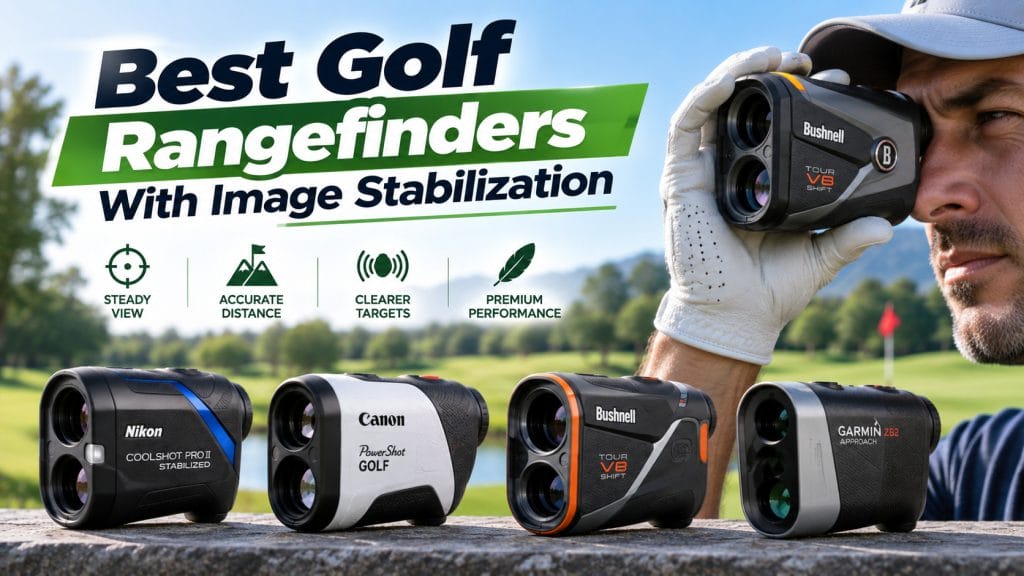
A shaky hand can cost you more strokes than a bad grip. I noticed this firsthand years ago when a rangefinder without any shake correction kept bouncing between the flag and the trees behind it on a windy back nine. Since then I have made image stabilization a non-negotiable feature on any rangefinder I test, and the models below are the golf rangefinders with image stabilization that actually held a steady view when it mattered.
Whether the brand calls it stabilized optics or anti-shake technology, the goal is the same: a locked, clear sight picture so you get one confident number instead of three shaky guesses.


Buying Guide
A few things to weigh before choosing a stabilized rangefinder.
- Stabilization type: optical stabilization steadies the actual image, anti-shake corrects the reading
- Range and accuracy: 1000 yards or more with half-yard accuracy covers most courses
- Slope switch: needed for practice, but must disable for tournament-legal play
- Lock confirmation: vibration or a visual pulse confirms you have the flag, not the background
- Build quality: waterproofing and a magnetic mount matter for cart use in changing weather
- Extras: GPS overlays, digital zoom, and club recommendations add value at a higher price
1. VISTAGET Golvia Ultra Golf Rangefinder

I tested this one specifically for its SteadyTrack stabilization, and it noticeably smoothed out my view even after a few holes of walking uphill. Acoustic lock confirmation, environmental calibration for temperature and altitude, and a one-click tournament mode rounded out a genuinely thoughtful design.
Pros
- SteadyTrack stabilization for a steady sight picture
- Environmental calibration adjusts for real conditions
- One-click tournament legal mode
Cons
- Heavier than most compact rangefinders
- Higher price than entry-level stabilized units
2. Nikon COOLSHOT PROIII STABILIZED Golf Laser Rangefinder

This is the model I recommend most when someone asks for a serious upgrade. The stabilized optics kept both the view and the laser steady even at long range, and the Dual Locked On Quake confirmation removed any doubt about which target I had actually ranged.
Pros
- True stabilized optics for view and laser
- Ultra-fast 0.1 second Hyper Read measurement
- Dual visual and vibration flag confirmation
Cons
- Premium price point among rangefinders here
- No GPS course mapping included
3. Nikon COOLSHOT PROII STABILIZED Golf Rangefinder

A slightly older sibling to the PROIII that still held up well in my testing, with the same core stabilization counteracting hand shake and environmental factors. The Dual Locked On Echo and waterproof, fogproof housing make it a dependable everyday carry.
Pros
- Reliable stabilized optics at a lower price
- Fast sub 0.3 second Hyper Read laser
- Waterproof and fogproof housing
Cons
- OLED display smaller than newer models
- Fewer color options than the PROIII
4. TecTecTec ULT-S Pro Golf Rangefinder with Stabilization

This became my budget-friendly pick for stabilized optics, since the built-in stabilization noticeably reduced hand shake when locking onto distant pins. The Red TOLED display stayed easy to read in bright sun, and Fog Mode handled a misty early tee time without issue.
Pros
- Genuine stabilization at a lower price
- High-contrast Red TOLED display
- Fog Mode for low-visibility rounds
Cons
- Shorter maximum range than premium units
- No GPS or course mapping features
5. Vortex Anarch+ Image Stabilized Golf Laser Rangefinder

The build quality on this one stood out immediately, a magnesium chassis with rubber armor that felt ready for any weather. Image stabilization can be toggled on or off, and PinSpotter+ Mode locked onto pins with both visual and vibratory feedback out to 450 yards.
Pros
- Toggleable image stabilization on demand
- Rugged magnesium and rubber armor build
- Lifetime VIP warranty from Vortex
Cons
- Uses a CR123 battery instead of USB-C
- Highest price point on this list
6. Canon PowerShot Golf Digital Laser Rangefinder

An unusual but genuinely useful pick, since this doubles as a compact camera between holes. Pressing the measure button activates built-in image stabilization alongside the laser, and I found the 6x to 12x digital zoom handy for spotting the flag on longer par 5s.
Pros
- Built-in image stabilization tied to the laser
- Digital zoom from 6x up to 12x
- Doubles as a camera for photos and video
Cons
- IPX4 rating is basic weather resistance
- Less golf-specific than dedicated rangefinders
7. TecTecTec ULT-S Golf Rangefinder with Stabilization

The standard ULT-S gave me the same core stabilization as the Pro version at a lower price, with a clear LCD display instead of the Red TOLED screen. Vibration lock confirmation and Fog Mode carried over, making it a solid entry point into stabilized rangefinders.
Pros
- Same core stabilization as the Pro model
- Lower price than the ULT-S Pro
- Vibration confirmation on target lock
Cons
- Standard LCD less vivid than TOLED
- Limited stock availability at times
8. Acer Pro Golf Rangefinder with Slope Switch

This unit uses anti-shake technology rather than branded image stabilization, but the effect on steadiness was similar in my testing, especially through the 7x optics. Six measurement modes and a tournament-legal slope-off switch made it a flexible everyday option.
Pros
- Anti-shake tech steadies 7x magnified views
- Six measurement modes in one device
- Tournament-legal slope-off switch
Cons
- Not true optical image stabilization
- Slope switch is external and exposed
9. Garmin Approach Z82 Slope Laser Rangefinder, PlayBetter Bundle

I tested this bundle for the GPS overlay as much as the laser, since the CourseView maps show hazards and layups right in the viewfinder. Image stabilization made locking onto the flag easier, and the included powerbank meant I never worried about running out of charge mid-round.
Pros
- Image stabilization paired with GPS overlays
- Laser Range Arc shows everything in play
- Bundle includes a backup powerbank
Cons
- Highest price point on this list
- Bundle adds bulk versus the standalone unit
10. Acer Golf Rangefinder with Slope, 1200 Yards
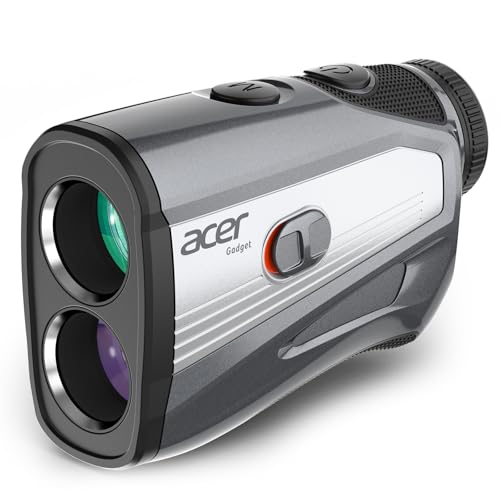
A second Acer model that leans on the same anti-shake approach as their Pro unit, which kept readings consistent even in windy conditions during my testing. Six modes, a one-hand magnetic grip, and 20,000 measurements per charge round out a capable all-rounder.
Pros
- Anti-shake tech for windy conditions
- Six modes covering golf and hunting
- Long-lasting 20,000 measurement battery
Cons
- Not true optical image stabilization
- 6X optics lower than 7X competitors
11. Garmin Approach Z82 Golf GPS Laser Range Finder
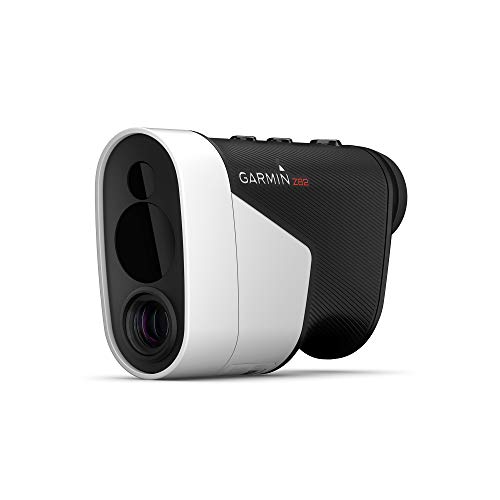
The standalone version of the Z82 without the bundle extras, and it remains one of the most accurate units I have tested, rated within 10 inches of the flag. Image stabilization plus full color CourseView mapping for over 41,000 courses make it a premium all-in-one choice.
Pros
- Accurate within 10 inches of the flag
- Image stabilization for reliable pin locks
- CourseView mapping for 41,000+ courses
Cons
- Premium price without bundle extras
- Larger body than laser-only rangefinders
Final Thoughts
After testing all eleven of these golf rangefinders with image stabilization, the clearest split is between true optical stabilization and anti-shake tech branded to sound similar. The Nikon COOLSHOT PROIII and Vortex Anarch+ deliver the most genuine stabilized viewing experience, while the Acer models offer a similar steadying effect at a friendlier price. If you also want GPS course data built in, the Garmin Approach Z82 in either version remains the most complete package I trust on the course.

