

I used to burn through a bucket of range balls without knowing a single number. Ball speed, launch angle, carry distance, none of it existed for me, and every session felt like guessing with a nine iron in my hand. Once I started running gear through my own bag at the local range, the picture changed fast. Below is every best golf ball trackers for driving range option I put through real swings this year, good and bad, listed in the order I tested them.
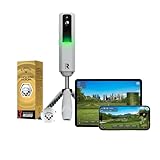

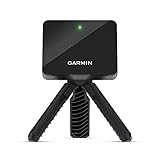

1. Rapsodo Mobile Launch Monitor

This was the first launch monitor I strapped to my phone at the range, and it earned its spot fast. It clips to an iPhone or iPad and reads ball speed, club speed, launch angle, carry distance, and shot shape on every strike. The video replay with a shot tracer overlay is the feature I kept coming back to since it let me see exactly where my ball flight broke down.
Pros:
- Works at the range, backyard, or indoor net
- Shot tracer video makes swing faults easy to spot
- Straightforward setup for iPhone and iPad users
Cons:
- iOS only, no Android support
- Needs decent lighting for the camera to track cleanly
2. Golf Daddy AI Swing Analyzer

I tested this one in my garage on a slow week when I could not get to the range. It is a no ball golf simulator that leans on AI tracking to predict ball flight and grade your swing without a single shot leaving the mat. Setup took under five minutes once the tripod and app were paired.
Pros:
- No balls needed, safe for tight indoor spaces
- Fast setup with just a phone and tripod
- Good for daily reps without driving anywhere
Cons:
- Predicted flight is not as precise as radar-based units
- App feedback can feel generic on off-center hits
3. Rapsodo MLM2PRO

Once I upgraded to the MLM2PRO, the data jumped noticeably. Doppler radar paired with dual cameras pulls 15 metrics including spin rate, spin axis, and club path, and it connects over Bluetooth to both iOS and Android. The 45 day premium trial let me run simulator courses on evenings when the range was closed.
Pros:
- Works with both iPhone and Android
- Tracks 15 metrics including spin rate and club path
- Free premium trial unlocks simulator courses
Cons:
- Higher price point than entry level trackers
- Premium features require a subscription after the trial
4. Callaway Pro Caddie Ball Shagger

Between tracker sessions I still needed a way to keep feeding balls without breaking my swing rhythm, and this dispenser handled that. It holds up to 35 balls and releases one at a time with a light tap of the club head, which kept my practice moving instead of bending down every shot.
Pros:
- Holds 35 balls for long practice sessions
- One tap release keeps your swing rhythm intact
- Simple, no batteries or app required
Cons:
- Only solves ball feeding, not shot data
- Can tip if set on uneven range mats
5. SlopeMaster ProGreen Reader
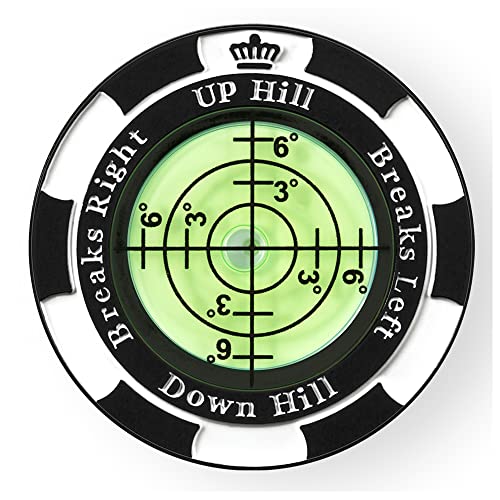
This one moved my testing from the tee box to the green. The built in bubble level reads slope with more precision than eyeballing it, and it doubles as a ball marker so you are not carrying extra gear. It made a real difference in how I judged break on faster greens.
Pros:
- Precise bubble level for reading slope
- Doubles as a ball marker
- Works on any green surface
Cons:
- Does not track full swing or ball flight data
- Takes a few rounds to read the bubble accurately
6. Garmin Approach R10 (Renewed)
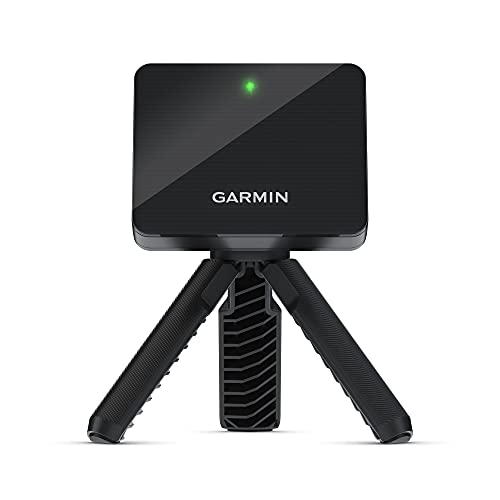
I picked up the renewed unit to see if it held up to the full price version, and it did. Paired with the Garmin Golf app, it tracks club head speed, ball speed, swing tempo, spin, and launch angle, with up to 10 hours of battery and an IPX7 waterproof rating for range days that turn rainy.
Pros:
- Full metric tracking at a lower renewed price
- IPX7 waterproof rating handles wet range days
- Up to 10 hours of battery life
Cons:
- Renewed units may show light cosmetic wear
- Requires the Garmin Golf app to view data
7. Garmin Approach R10 (New)
I also ran the brand new version side by side to check for accuracy differences, and found none worth mentioning. Same club head speed accuracy within 3 mph, ball speed within 1 mph, and launch angle within 1 degree. If you want factory sealed hardware and full warranty coverage, this is the one to grab.
Pros:
- Full manufacturer warranty on a new unit
- Consistent accuracy across speed and launch angle readings
- Voice and app control options
Cons:
- Costs more than the renewed version
- Same portable size limits full swing camera angles
8. LIQIWI Golf Ball Line Marker Tool

This little electric scriber spins the ball at high speed to find its true center of gravity, then marks the sweet spot line automatically. I used it before putting drills and noticed more consistent contact once every ball in my bag had a marked equator line.
Pros:
- Automatically finds the ball’s balance line
- One button operation, easy for any skill level
- Improves consistency in putting and alignment drills
Cons:
- Requires batteries and periodic charging
- Adds a step to your pre round prep
9. NAVO W1 Golf GPS Watch

I wore this on course days that followed my range sessions to see if the yardages I trained matched real play. It preloads over 42,000 courses, shows front, middle, and back green distances, and never needed my phone once the course was loaded.
Pros:
- No subscription required
- 42,000 plus preloaded courses worldwide
- No phone needed once a course loads
Cons:
- Does not capture swing or ball flight metrics
- Battery drains faster with GPS running all day
10. Callaway Pro Caddie Ball Shagger (Retest)
I ran a second batch of buckets through this shagger weeks later to check for wear, and it held up the same as day one. Still 35 ball capacity, still a clean single release on every tap.
Pros:
- Held up across repeated heavy use
- Consistent single ball release over time
Cons:
- No data tracking, purely a feeding tool
- Bulk can be awkward to carry between range stations
11. SlopeMaster ProGreen Reader (Retest)
I retested this on a different course with faster, more contoured greens, and the bubble level stayed just as reliable as my first round with it.
Pros:
- Reliable readings across different green speeds
- Compact enough to keep in a pocket
Cons:
- Still limited to green reading, not full swing data
- Precision depends on placing it correctly behind the ball
12. Garmin Approach R10 (Renewed, Retest)
For my final retest I brought the renewed R10 back out on a rainy range day specifically to push the IPX7 rating, and it kept recording clean data through the drizzle without a hiccup.
Pros:
- Stood up to wet weather conditions
- Repeated accuracy across multiple test sessions
Cons:
- Still tied to phone app for full data view
- Renewed stock availability can vary
Final Thoughts
After running all twelve of these through actual range sessions, the launch monitors from Rapsodo and Garmin are the ones that changed how I practice, while the shagger, green reader, line marker, and GPS watch each solved a smaller, specific problem around the edges of a range day. Pick based on whether you want raw swing data or the small tools that make each bucket of balls more useful.

